When over 500 Indigenous business leaders from 12 countries gathered in Naarm (Melbourne) last October for the 2025 World Indigenous Business Forum (WIBF), it highlighted the growing strength of Indigenous businesses on the world stage. Victoria’s selection as host underscored the state’s commitment to Aboriginal economic self-determination and its growing leadership in Indigenous business development.
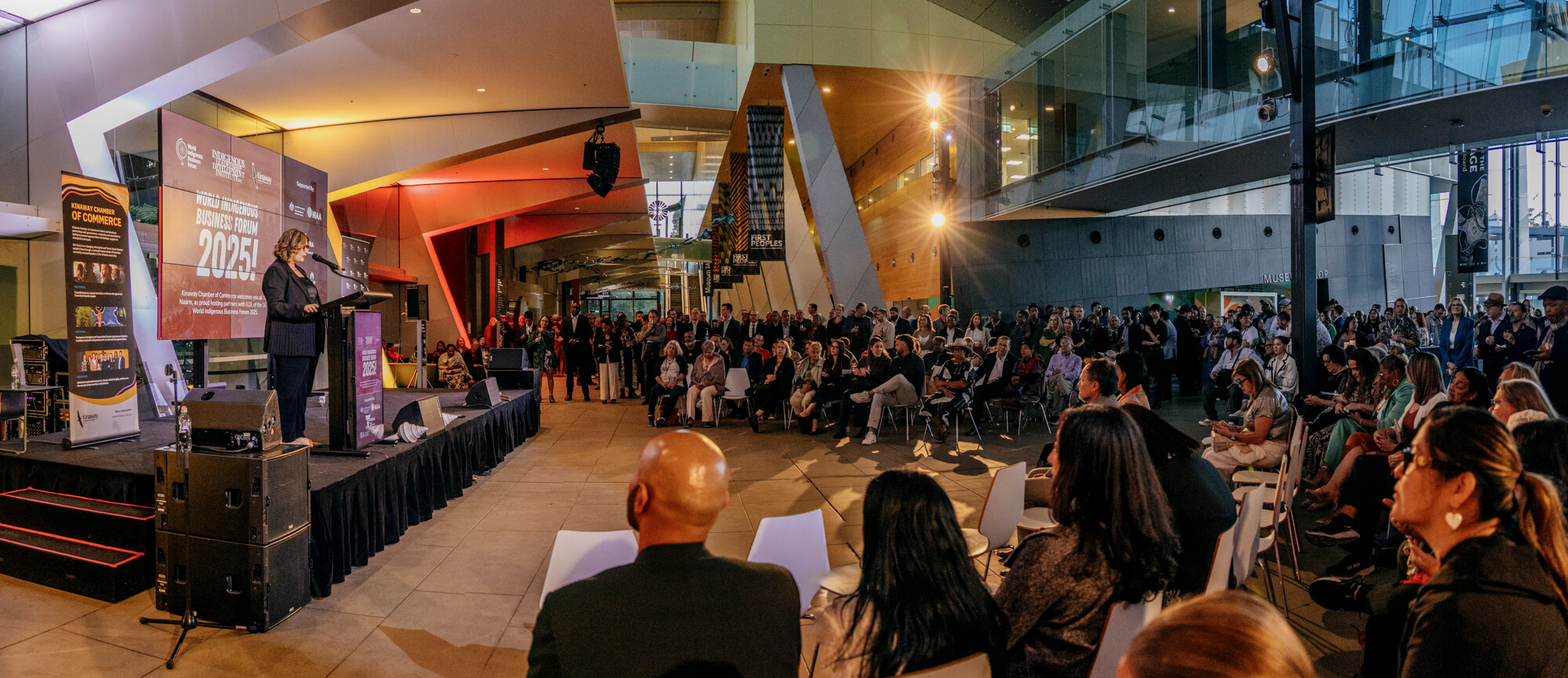
Held over three days, WIBF brought together Indigenous entrepreneurs and global business leaders to share innovative approaches, practical solutions, and real-world experiences in advancing Indigenous economic development. Delegates explored how Indigenous businesses can scale, access capital, enter new markets, and build the networks that drive sustainable growth while maintaining cultural integrity and community values.
The event was delivered through close collaboration between the Victorian Government — led by Associate Deputy Secretary for Aboriginal Economic Development (AED), Hans P Bokelund — Kinaway Chamber of Commerce, and Indigenous Business Australia.
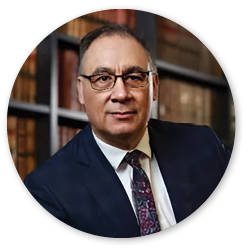
For Hans, a Darumbal/Turrbal man from Queensland, the path to building Indigenous business networks started with establishing the legal and economic foundations that make enterprise possible.
After practising as a barrister and leading Tarwirri (Victoria's Indigenous law professionals association), Hans became the inaugural Director of Aboriginal Melbourne in 2019, where he positioned Melbourne as a national leader in Aboriginal cultural recognition and economic participation.
His move to Kalgoorlie as CEO of Goldfields Land & Sea Council provided a pivotal opportunity to translate legal rights into economic outcomes. Hans led the organisation through four landmark Native Title determinations— Ngadju (Part A) in 2012, Esperance Nyungar (2014), Ngadju (Part B – Exclusive Native Title) in 2017 and WA Mirning People (2017). These legal victories provided Traditional Owners with cultural recognition and created the foundation for economic self-determination. Native title opens pathways for Indigenous communities to participate in major industries, negotiate commercial agreements, and build sustainable enterprises on their own country.
Today, Hans leads Victoria's Aboriginal Economic Development work, using decades of experience to shape policies and partnerships that support Aboriginal business growth across the state. As Chair of the Advancing Aboriginal Self-Determination Committee, he oversees Victoria's Yuma Yirramboi Strategy (Invest in Tomorrow), which focuses on employment and economic development for Aboriginal Victorians. This means supporting Indigenous entrepreneurship, connecting Aboriginal businesses to procurement opportunities, and building the commercial relationships that strengthen Victoria's economy.
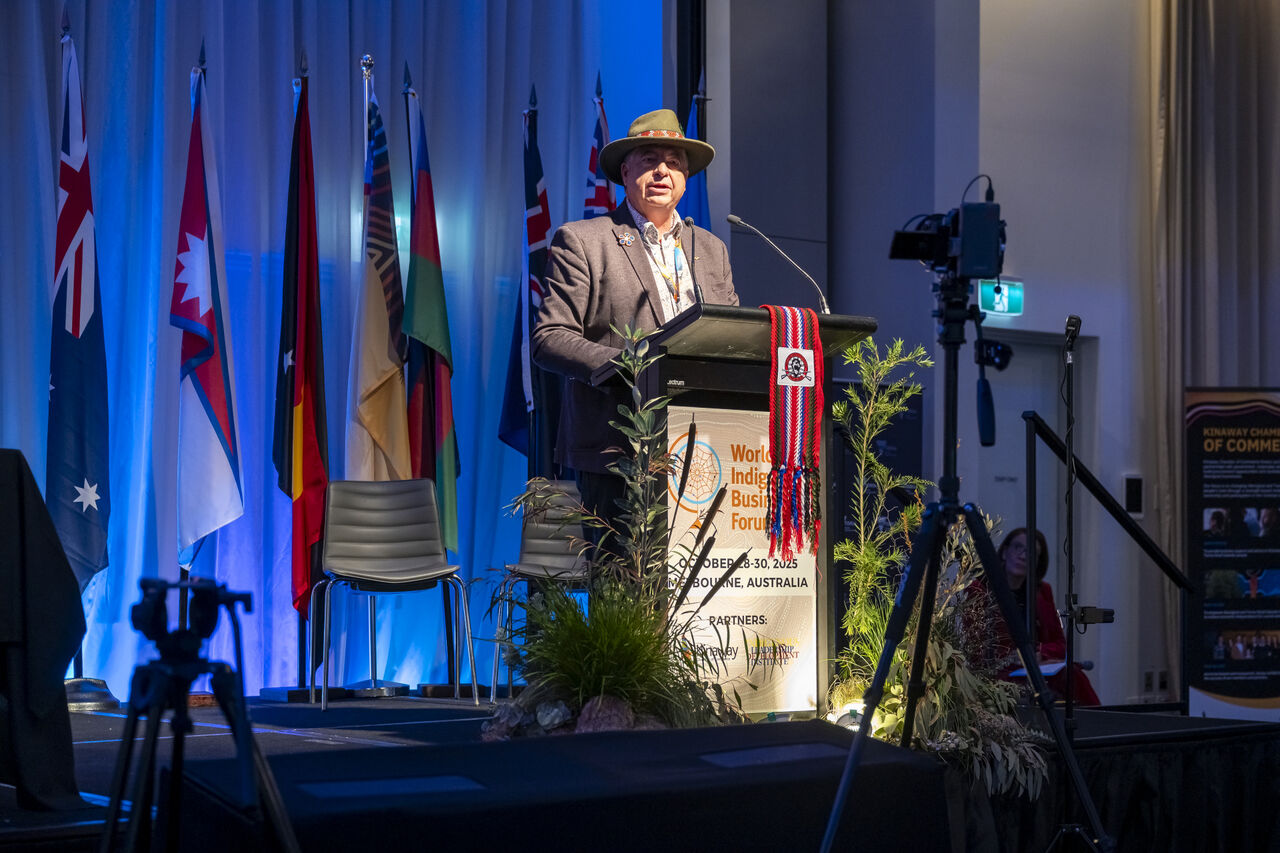
WIBF 2025 created an important platform for this work, connecting Victorian Aboriginal businesses with global networks, new markets and cross-cultural commercial partnerships.
Hans emphasised the deeper significance of these international connections:
'Indigenous-to-Indigenous business relationships hold a special significance. They are more than commercial exchanges; they are expressions of nationhood. When our businesses engage with one another, we reinforce our sovereignty, build cultural and economic resilience, and chart pathways for our communities that move us from the margins to the centre of economic life. These relationships shift the narrative from dependency to self-determination and create intergenerational opportunity rooted in culture and mutual respect.'
Hans P BokelundAssociate Deputy Secretary, Aboriginal Economic Development
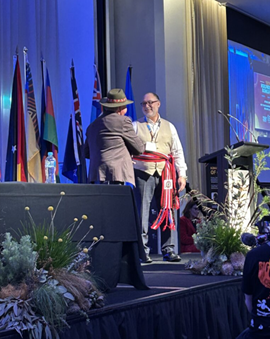
At this year's Forum, Hans received a Red River Métis sash from the Manitoba Métis Federation - a traditional symbol of respect, reciprocity and ongoing partnership. This recognition reflects his contribution to advancing Indigenous economic empowerment across Australia and internationally, and his leadership in building the relationships that underpin long-term economic outcomes.
'I was deeply honoured to receive the Red River Métis sash, a gesture that carries profound cultural meaning and expresses a spirit of respect, reciprocity, and continued relationship-building,'
he reflected. Hans described the presentation as more than ceremonial. It represented
'...an affirmation of our shared commitment as First Peoples to uplift one another across borders, nations, and histories. To carry the sash is to carry a responsibility, to walk forward with humility and dedication to strengthening these connections.'
This recognition reflects his decades of work, from securing native title to shaping Victorian policy and the growing momentum of international Indigenous business collaboration. The sash signals the strength of relationships being forged between First Peoples across continents, creating networks for collective economic strength.
Looking to the future, Hans outlined his vision for Aboriginal economic development:
'My vision for Aboriginal economic development in Victoria is grounded in this same philosophy. I believe in an economy where First Peoples are not merely participants but architects, shaping the systems, markets, and policy frameworks that drive prosperity. As Victoria advances Treaty, we have a unique opportunity to embed economic governance, cultural authority, and self-determining decision-making at the heart of how we build the Indigenous economy for the next century. This is not about inclusion alone; it is about sovereignty, capability, and long-term economic strength.'
He affirmed the significance of conveying these perspectives with Global Victoria's business audience to highlight that economic participation and sovereignty are not competing priorities but complementary forces that can drive shared prosperity.
'Sharing these insights with Global Victoria's business community is an important part of this work. Victoria can demonstrate global leadership in how First Peoples economic participation and economic sovereignty can coexist and thrive. Our message to international partners is clear: we do not seek special treatment. We seek meaningful partnership, grounded in respect, shared value, and a commitment to building economic systems that benefit all Victorians. First Peoples success strengthens the entire Victorian economy, and global business has a vital role to play in supporting that success.'
Hans’ work embodies a shift happening globally: Indigenous peoples setting their own economic agendas, building businesses, markets, and wealth through partnerships with each other, on their own terms.
Banner photograph by Jacinta Keefe